
Steel
Cast steel is used for components that must withstand high loads, impact, wear, or elevated temperatures. Such cast steel parts are in demand in mechanical engineering, metallurgy, energy technology, and other industrial sectors where strength, precise geometry, and subsequent machining are important.
For each project, the appropriate cast steel material is selected based on the actual operating conditions. Key factors include load, temperature, wear, the working environment, and the requirements for the finished component. If necessary, heat-resistant cast steel can also be used when the structure is continuously subjected to thermal stress.
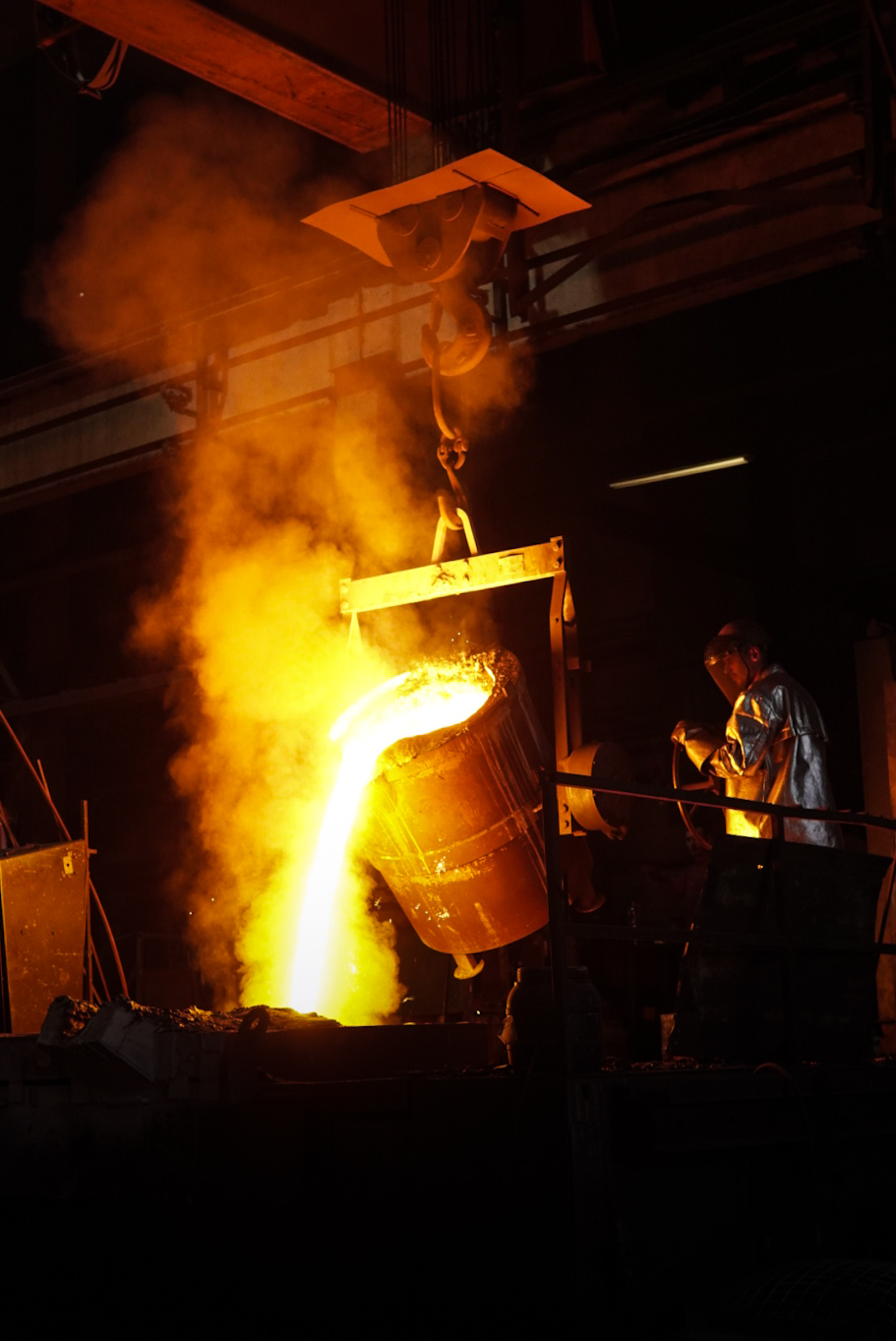
Steel Grades for the Manufacture of Cast Steel Parts
Various grades of steel are used in the manufacture of cast steel components—depending on the conditions under which the component will later operate. The decisive factors are load, temperature, wear, impact stress, and the requirements for the finished part.
Consequently, the appropriate cast steel material cannot be selected in general terms but must be chosen specifically for a particular application. This ensures that the finished cast component possesses the necessary mechanical properties, remains machinable, and can be reliably used in machines, systems, or other industrial assemblies.
-

Carbon steel
For rugged components for general use
-
Structural steel
For load-bearing assemblies and components
-
Alloy Steel
For more demanding material requirements
-
Low-alloy steel
For greater strength and improved properties
-
High-alloy steel
For demanding operating conditions
-
Wear-resistant steel
For components subject to high wear
-
Heat-resistant and heat-hardening steel
For use at high temperatures
-
Corrosion-resistant steel
For harsh and humid environments
-
Manganese steel / Hadfield steel
For shock loads and heavy wear
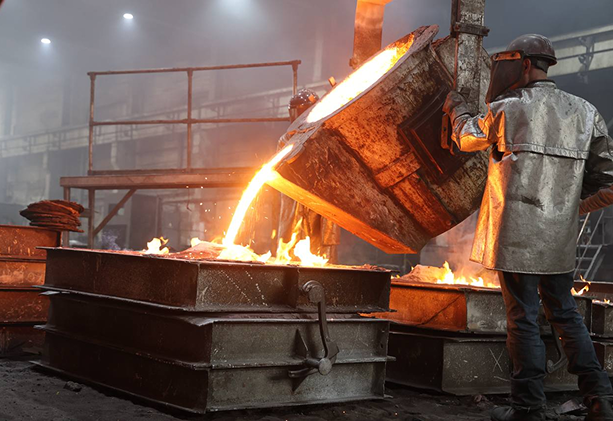
Advantages of Custom Cast Steel
-

High strength
Cast steel is used in applications where a component is subjected to continuous stress, must withstand impact loads, and is required to retain its shape even under difficult operating conditions.
-

Resistance to Wear and Temperature
Cast steel parts are suitable for assemblies in which the material is exposed to friction, heat, or varying operating conditions. Depending on the application, heat-resistant cast steel or wear-resistant cast steel can be used.
-

Good options for further processing
After casting, the component can be machined. This allows for the production of precise dimensions, mating surfaces, holes, and prepared working surfaces in accordance with the drawing.
Who Are Cast Steel Parts Suitable For?
Mechanical engineering
Cast and machined steel castings for mechanical engineering: gears, machine beds, gearboxes, pump housings, and other assemblies for industrial equipment.
Mining Industry
Castings and components for the mining industry: replacement parts for crushers, mills, conveyor systems, excavators, and other heavy equipment.
Rail Transport
Cast steel parts and assemblies for rail transportation: parts for railcars, bogies, braking systems, switches, and track systems.
Metallurgy
Heat-resistant castings, rollers, furnace components, converter elements, and other steel castings for metallurgical plants.
Construction and Infrastructure
Cast and metal structural components for construction and infrastructure projects: support elements, foundations, bridge components, gratings, manhole covers, stairs, and auxiliary structures.
Energy Facilities
Cast housings, valves, flanges, manifolds, and components for pumping stations, thermal power plants, and other energy systems.
Selecting the Steel Grade Based on Operating Conditions
The steel grade is selected based on load, operating environment, wear, temperature, corrosion resistance, and subsequent machining. This allows for the use of a cast steel material that is suited to the component’s actual operating conditions—rather than selecting steel based solely on a general principle.
About Us in Numbers
-
20 + Hectares
Total production area
-
1000 + metric tons
Castings per month — Group's total capacity
-
30 + Partner
From countries in the EU, the Balkans, and Eastern Europe
How to Order Cast Steel According to a Drawing
-
We determine which castings or components are to be manufactured, in what quantities, and according to what specifications.
-
We review drawings, samples, or technical specifications to understand the component’s parameters and its operating conditions.
-
We select the material based on the load, operating conditions, and requirements for the finished component.
-
We manufacture the cast steel taking into account the component’s geometry, material properties, and production requirements.
-
If necessary, additional processing is performed. The finished components are then prepared for delivery to the customer.
Benefits of Working with Us
-
Complete production cycle
The Western Foundry Group handles the entire production process—from preparing the equipment and casting to machining the finished components.
-

Modern production equipment
We use equipment that allows us to produce cast steel parts in accordance with requirements regarding geometry, material, and further processing.
-

Quality control at every stage
The material parameters and finished products are inspected during the production process. This is particularly important for components that operate under stress and in harsh operating conditions.
-
Wide selection of steel grades
We select the material best suited for the specific application: from carbon and structural steels to special steel grades designed for wear, high temperatures, and corrosive media.
-

Production for Different Quantities
We manufacture both individual items and production runs—depending on the task, technical documentation, and the customer’s needs.
Frequently Asked Questions about Steel Casting
Yes. In such projects, the material is selected based on operating conditions—impact, wear, temperature, environment, strength requirements, and subsequent machining—rather than the part’s name. For instance, GS-52 might be considered for certain housing and loaded parts if the task requires clear material mechanics and predictable operational behavior.
Yes. If a project is tied to international requirements, steel casting to DIN 1681 or steel casting to EN 10293 can be incorporated into the calculation from the outset—depending on which standard is more convenient for the customer regarding coordination and acceptance.
Yes. For such tasks, not only the shape of the part but also the alloy’s resistance to the actual operating environment is typically crucial. In these projects, GX8CrNi12 can be applied if the customer requires a stainless steel casting with clear properties for a specific assembly.
Both formats are possible. If a single part is needed for repair, the order can be launched individually. If it involves a recurring nomenclature, it is more convenient to manage the project as a steel foundry under an agreed supply program—with clear logic regarding materials, deadlines, and batch repeatability.
Yes. If a full set of design documentation is unavailable, the part itself, a sketch, or a technical description can be submitted for production. Following an evaluation of the geometry and operating conditions, it becomes clear which steel grade is suitable, which standard is logical to apply, and how best to proceed with manufacturing.
Fill out the form to schedule a consultation.
Custom Steel Casting for Industrial Equipment
When an enterprise requires a part designed for a specific load rather than a standard blank, steel casting is typically chosen. This format is suitable for housing assemblies, plates, supports, covers, transition elements, and parts that subsequently undergo mechanical machining and operate within equipment. In such orders, it is important not merely to cast the metal into a shape, but to immediately understand the environment in which the part will operate, the load it will withstand, and the service life margin required by the customer.
The Western Foundry Group, comprising Promlit Plant LLC and Gorstal Plant LLC, accepts orders for castings based on drawings, 3D models, samples, and technical specifications. This is a convenient format for the customer: it is possible to submit either a single part for repair or a series for scheduled deliveries, without unnecessarily fragmenting the project among different contractors.
Where Steel Castings Are Applied
In practice, metal casting is ordered when rolled products, welded blanks, or standard finished parts do not solve the problem. This applies to assemblies for mechanical engineering, the power sector, transport equipment, metallurgy, and production lines, where precise geometry, strength, and the ability to adapt the product to specific operating conditions are crucial.
The items most frequently submitted for production include:
- Housing parts and covers;
- Plates, bases, and supports;
- Flanges and transition elements;
- Pump and gearbox equipment components;
- Blanks for mechanical machining;
- Non-standard items based on custom drawings.
Which Steel Grades and Groups Are Used
The selection of an alloy is always based on operating conditions, not just the “name of the part”. That is precisely why the steel casting material is coordinated prior to launching the order. The exact same housing can be cast from different grades—depending on temperature, pressure, corrosive environment, impact load, and service life requirements.
To quickly grasp the selection logic, the main groups can be summarized as follows:
| Steel Group | Where It Is Typically Applied |
| Carbon | Housing parts, bases, supports |
| Alloyed | Loaded assemblies, wear parts |
| Stainless | Pumps, valves, chemical equipment |
| Heat-resistant | Furnace, power, and metallurgical assemblies |
Stainless, Heat-Resistant, and Wear-Resistant Casting
If a part operates in a humid or aggressive environment, stainless steel casting is usually considered for the calculation. Such castings are in high demand for pump assemblies, valves, covers, flanges, and other parts where standard steel quickly loses its service life. Here, corrosion resistance, geometric stability, and the capability for subsequent machining come to the forefront.
For assemblies operating under heating and thermal cycles, heat-resistant steel casting is utilized. In these projects, it is vital not only to maintain the part’s shape but also to preserve the metal’s properties at high temperatures.
If the primary objective is resistance to abrasion and heavy operational loads, wear-resistant steel casting can be incorporated into the project. This is particularly relevant for parts continuously subjected to friction, impact, or abrasive wear.
Manufacturing and Pricing Factors
For a number of projects, sand casting is applied—this is a convenient manufacturing method when flexibility in geometry is needed, allowing work with varying part masses and the launching of both single items and series.
For the customer, what matters is not an abstract price list, but the final cost of a specific part. Prices for steel casting are influenced by the casting’s mass, shape complexity, selected steel grade, batch size, precision requirements, mechanical machining, and manufacturing lead times. Serial items generally offer a more predictable unit cost, whereas single items are more heavily dependent on tooling preparation and project complexity.
What is Needed for an Estimate
To receive a quick calculation, it is usually sufficient to provide:
- A drawing;
- A 3D model;
- A sample;
- A specification;
- A brief description of operating conditions.
After this, we can substantively discuss the steel grade, molding method, scope of mechanical machining, and manufacturing lead time.